
Tube Harmonic Exciter
ZenTubeAnalog warmth. Harmonic precision.
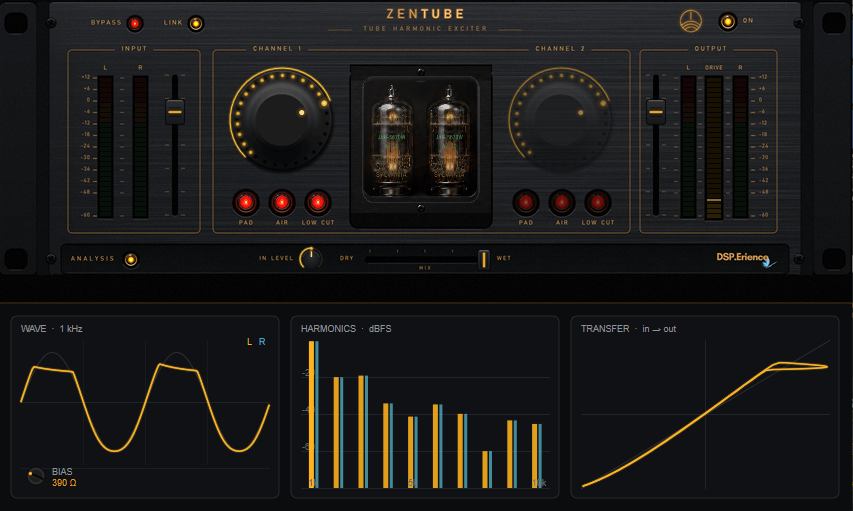
In detail
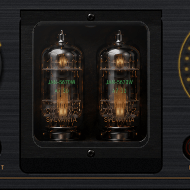
The dual 5670 triode
The tube pair driving the modeling engine, running at 4x oversampling.
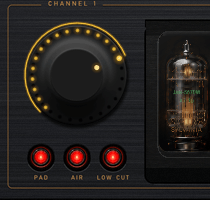
Gain-compensated Drive
Turning it up lowers the fundamental and diverts energy into harmonics — the meter reads push, not distortion.
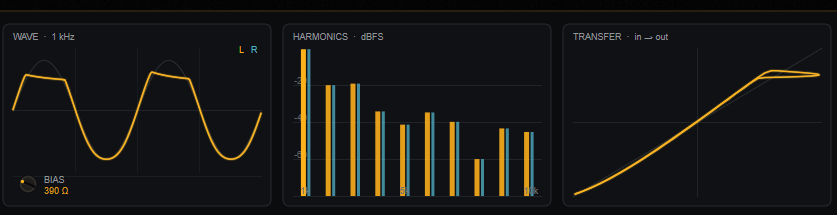
Live analysis panel
Waveform, harmonic content in dBFS, and the input-to-output transfer curve, in real time.
ZenTube models the physical behavior of a dual 5670 triode — not a sample library, not a neural network trained on recordings — with full circuit modeling at 4x oversampling to keep harmonics free of aliasing even with Drive pushed all the way.
Drive is gain-compensated by design: turning it up lowers the fundamental and diverts energy into harmonics, exactly like real hardware. The Drive meter reads tube push, not raw distortion.
AIR adds high-frequency lift (a high shelf), Low Cut clears low-end rumble before it reaches the tube stage, and dry/wet MIX is phase- and delay-compensated so it never cancels content in the high end.
Controls
- Drive — −10 to +30 dB, tube push (gain-compensated)
- AIR — high shelf, up to +4 dB @ 10 kHz
- Low Cut — high-pass at 80 Hz before the tube stage
- Pad — −20 dB, for tight-headroom stages
- Input / Output Trim — independent fine calibration
- Mix — dry/wet, with oversampling delay compensation
- Analysis panel — live metering of input, output, and drive